
Offline operation
Edge computing keeps perception and decisions local, without cloud or internet dependency.
 Purchase / partnerContact us
Four core breakthroughs reshape the foundation of embodied AI.
They perceive, understand, think, act, learn, and evolve.
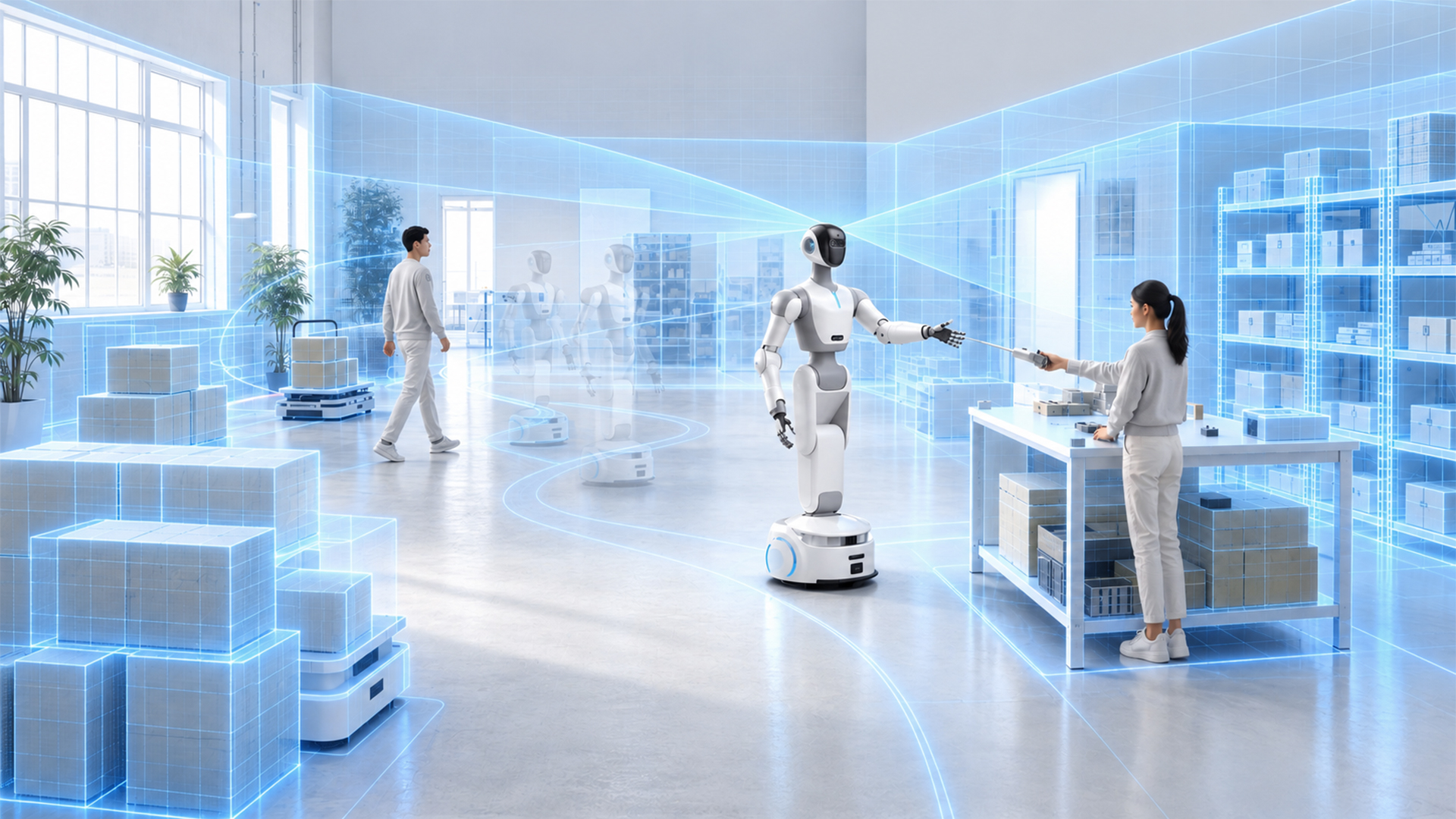
Most systems stop at mapping and sensing. HX TECH moves into spatial cognition—understanding the relationships between people, objects, and places.
We fuse visual, depth, and semantic data to build precise 3D scene models that track changes in real time and update spatial understanding autonomously.
Edge computing keeps perception and decisions local, without cloud or internet dependency.

Edge computing keeps perception and decisions local, without cloud or internet dependency.

Edge computing keeps perception and decisions local, without cloud or internet dependency.
Edge computing keeps perception and decisions local, without cloud or internet dependency.
Edge computing keeps perception and decisions local, without cloud or internet dependency.
Edge computing keeps perception and decisions local, without cloud or internet dependency.
Edge computing keeps perception and decisions local, without cloud or internet dependency.
HX TECH replaces layered, stitched-together systems with a unified model that jointly trains vision, language, and action from the ground up. Native multimodal fusion eliminates cross-module synchronization and data-transfer loss, allowing perception, cognition, decision-making, and execution to flow in one continuous loop. The result is a genuine human-like cognitive core—not superficial coordination among separate systems—with thought and motion unified for millisecond-level response.
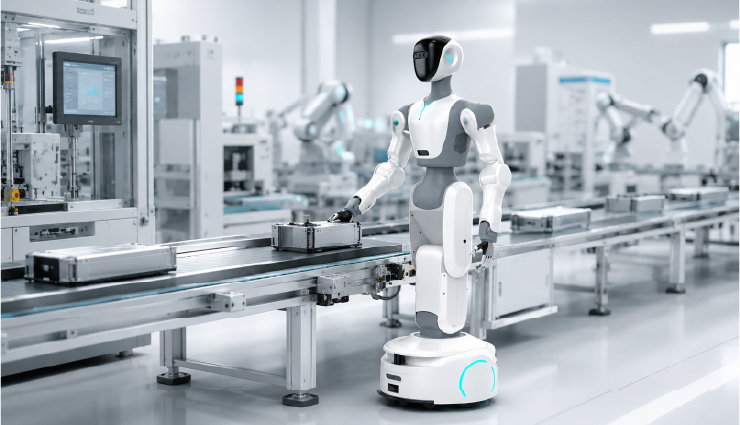
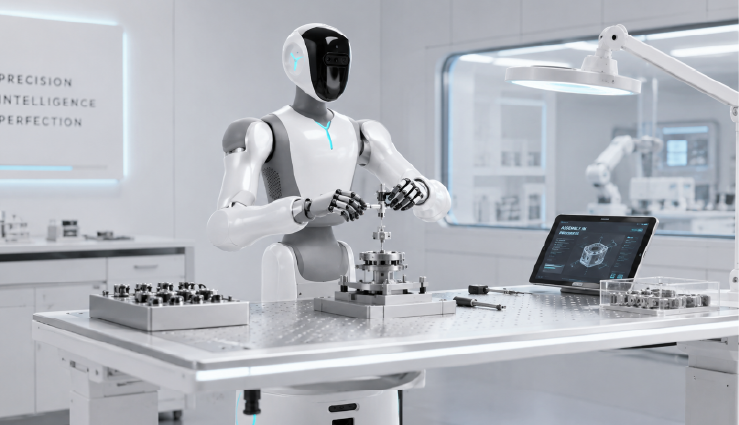
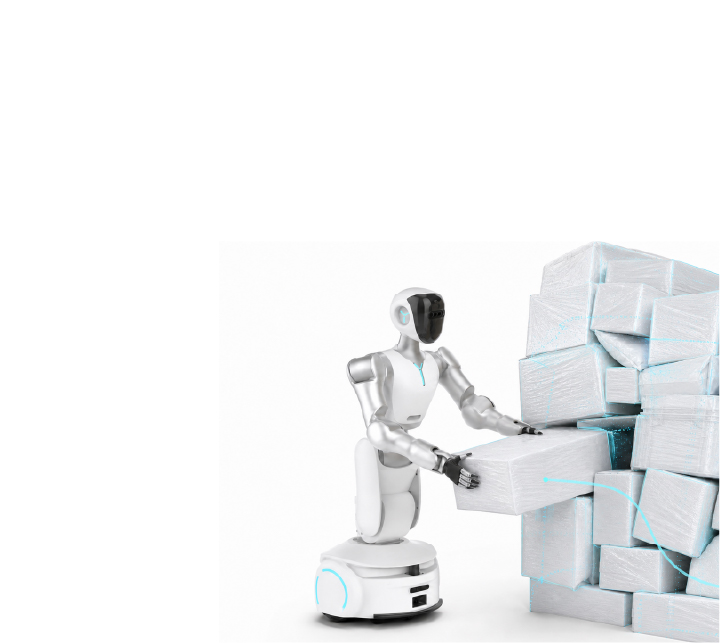
HX TECH industrial robots build a holistic understanding of people, machines, materials, and the production environment, enabling them to truly interpret the production line: precise collaboration in shared work zones, safe avoidance in hazardous zones, and dynamic yielding in buffer zones. While the industry is still exploring practical paths for spatial intelligence, HX TECH has already established a substantial technical moat.
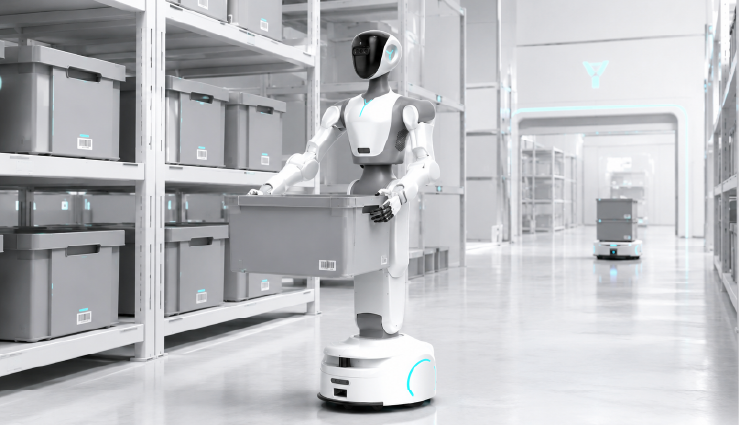
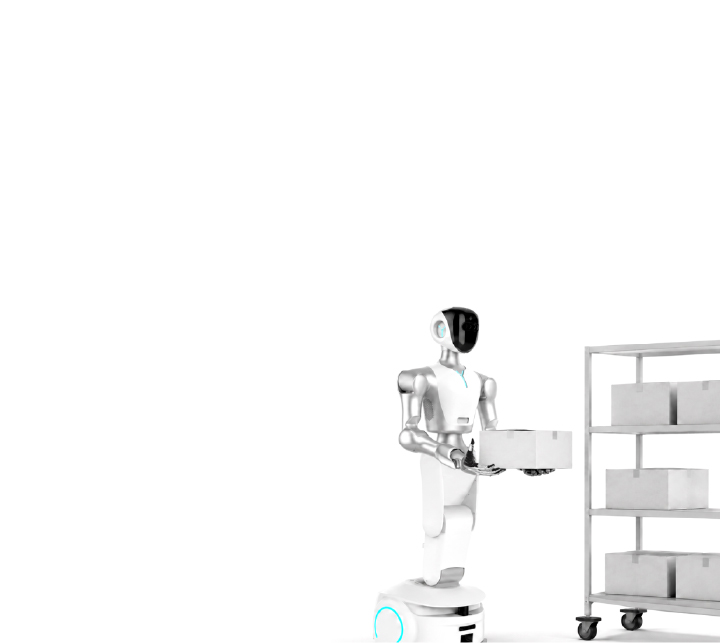
On dynamic production lines and in unmanned warehouses, robots learn while they work. Reinforcement learning and imitation learning turn every precise grasp and every human-robot avoidance maneuver into experience data. When facing flexible line changes or high-precision assembly, robots autonomously optimize paths and force, continually improving assembly accuracy and collaboration efficiency without repeated manual tuning. The data flywheel accelerates on the factory floor: robots grow more capable with use, and production lines become more efficient.
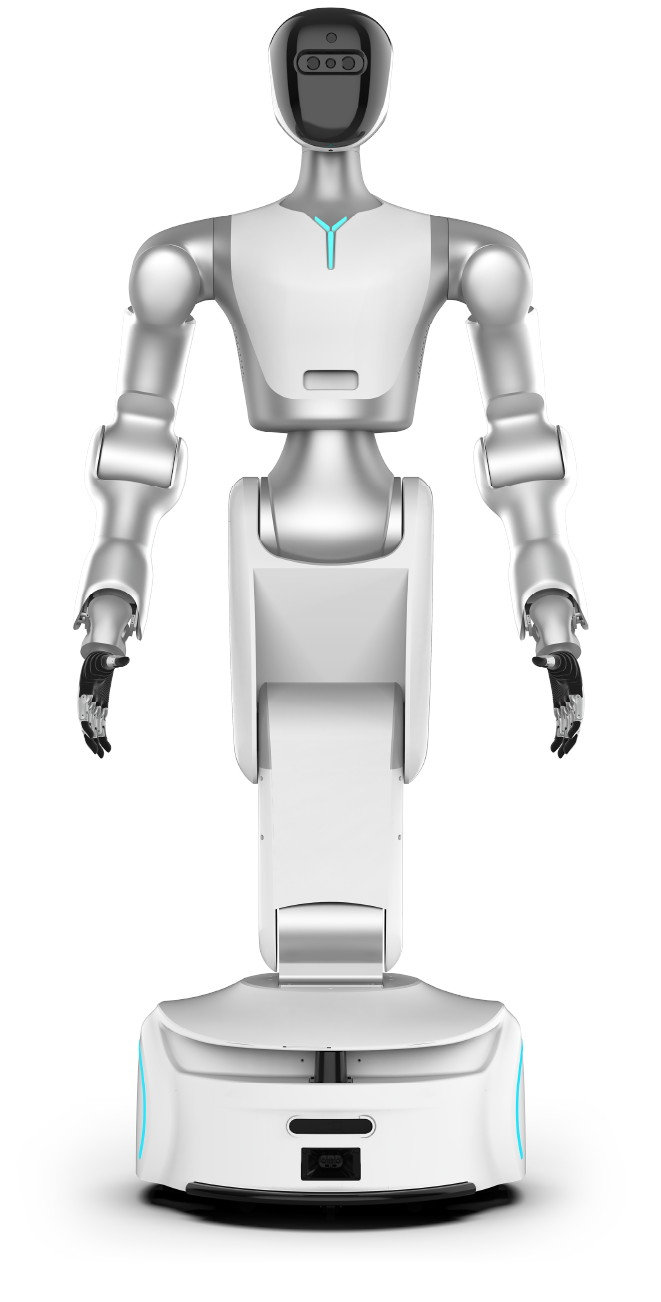
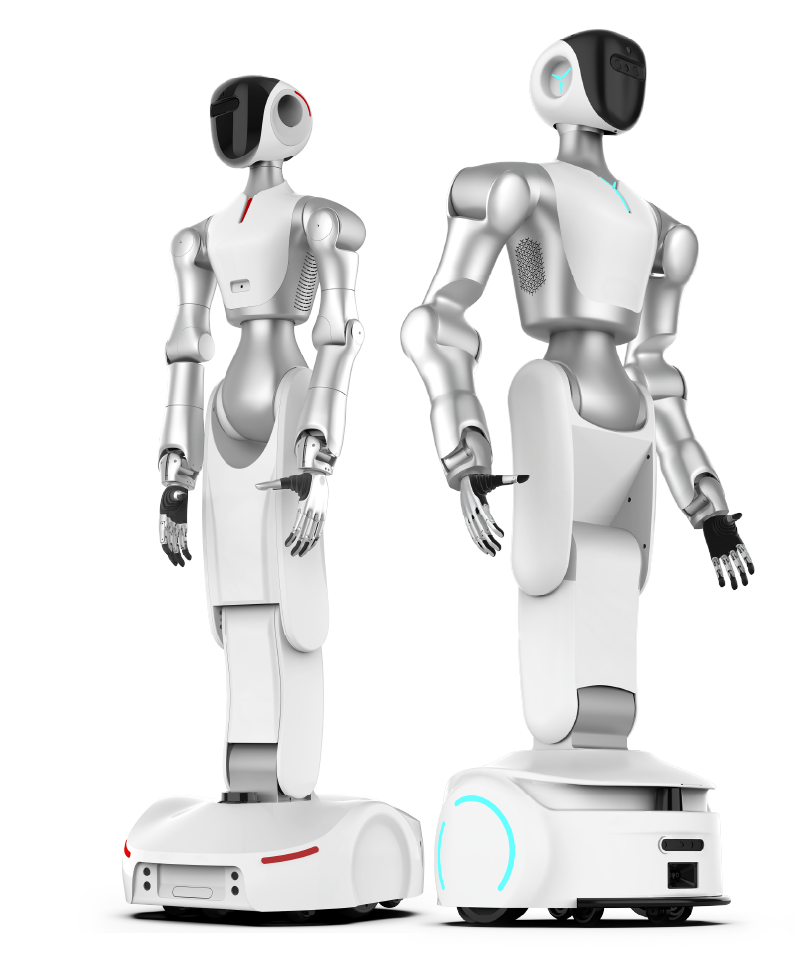
A dual-layer architecture pairs an intelligent brain with a motion cerebellum. The brain handles panoramic visual scanning, spatial modeling, and task decisions, while the cerebellum coordinates whole-body movement, force control, and trajectory stability. Large-model decisions directly drive millisecond-level motion control, seamlessly connecting thought and action. This achieves unity of intent and motion: what is conceived is immediately performed, and what is performed reaches its goal with minimal intermediate loss.
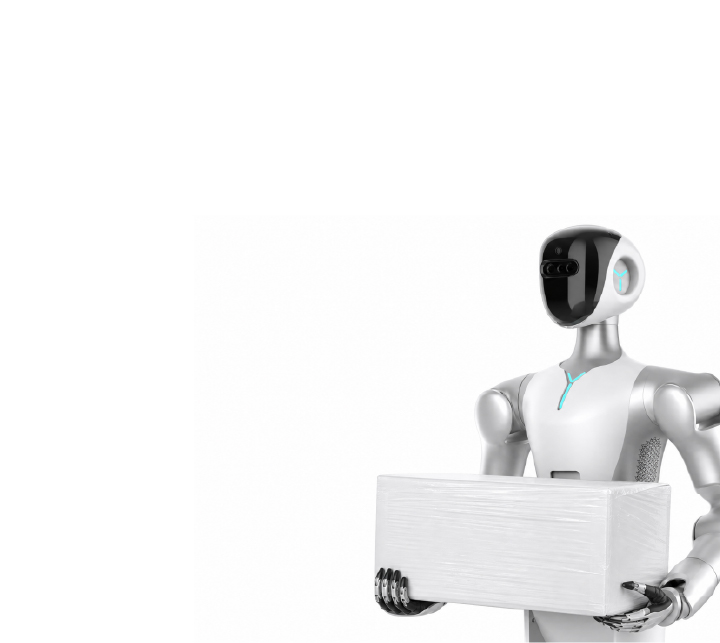
A progressive capability chain extends from stable locomotion to precision control and then coordinated operation, covering motion-control needs across scenarios. Real-time disturbance compensation proactively handles uneven ground, sudden load changes, and external vibration. This gives the robot systematic strengths in precision, compliance, coordination, and human-like movement.
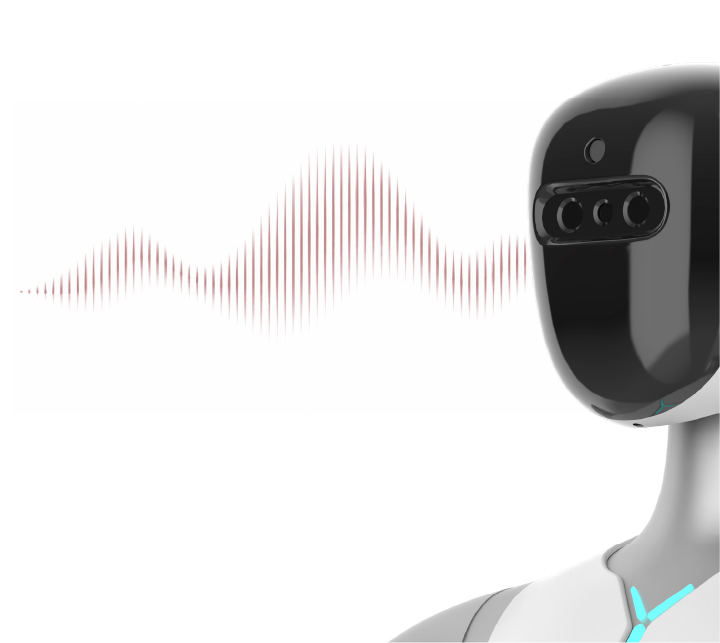
Powered by our self-developed VLA model and spatial intelligence, the robot can read natural-language task instructions and autonomously complete the entire workflow—from semantic understanding and target recognition to task-level path planning and execution. It can learn new skills by observing demonstrations, without a teach pendant, pre-programming, or step-by-step human instruction. The core value is open-ended generalization and learn-as-you-go usability: it explores, models, and operates independently in unfamiliar environments, eliminating scenario dependence for true out-of-the-box deployment.